
When you think of what a family of origin means to you, I suspect you have specific ideas that are conjured up in your head.
Typically, that means your mom and dad, maybe siblings.
Sometimes that family of origin means step parents, or grandparents, whoever took part in raising you to shape the culture, values, ideologies that appear to be “truth” to the young mind.
Whoever they are, their fears, anxieties, love, passions, interests, and beliefs usually become quite close to our own, unless you dig deep into your own soul with a desire to know that some of the things you thought were “truths” are not your “truths.”
For me, it means something different.
My wife is Norwegian, and I am an American from the Midwest.
Our love story and meeting is one we’ve told more times than necessary likely…but hey, we love to tell it.
The reason I’m sharing a new perspective on what family of origins can mean to an international couple, is I’m living it right now.
We are both products of divorce, where one of our parents eventually remarried and found happiness in another.
The culture gaps between our families of origins are huge. I’m from a very conservative and religious pocket of the country. She is from a very liberal and secular part of the world.
So my question is this…
How can two people from such different parts of the world, different political ideologies, environmental, social, and religious ideas find love? And rear children?
Let’s take a look.
Despite these common differences, the truth is Sunniva and I have a great deal in common. How does that happen? We are still learning about that as we learn about our childhood, our parents, our DNA, and ourselves.
A lot of your personality traits are formed within your first 6-12 weeks of life, according to many psychologists. This is a period of development I had not thought imprinting could impact, until I finally looked into the research that was out there.
The first 18 months of life really solidify our identity, and our perception of the world in many capacities based on what was happening around us. This is why children are so extremely important in terms of the future, how they are cared for, and what energies they are around.
I read a study this last week that you can see with extreme measured validity, that children raised where discipline and religion were prominent in the home during that period are statistically likely to be either liberal or conservative themselves.
Let me state that again.
If you were raised with a caregiver the first two years of your life who was empathic, tolerant of other views, not focused on obedience and discipline as much as allowing creativity and compassion, you are molding in the early stage of life how that person will respond as an adult. Of course there are exceptions to these rules, but science shows us measured results that can give us a firm understanding of how to improve the well being of children and ourselves.
My first understanding of political and ideological values was around ten. Primarily because my stepfather was very vocal about his views, and my mother quite passive about her views. In other words, she would not stir the pot and kept her cards on anything controversial close to her chest. (Likely very similar to her own mother.)
So how did I end up with a vantage point that was opposite of most everybody around me?
Take money, for instance. I was reinforced to believe that based on the value system of the house, you were doing good if you saved, invested, and had a good stable job that you worked hard at.
Now I’m not proposing this as bad. I still received a value system that I am stuck with today.
Our parents are always doing the best they can. I will do the best I can, based on my lifetime of experience, new scientific data, and a deep hope they know I want them to learn more than me. I know their generation is ready for even more change than my own. Open doors of the mind not closed.
I want them to see the stars brighter, to dare to go further into the arts and sciences or business if they choose.
You see, the patterns of my stepfather and mother are really just the patterns of their parents. 9 out of ten people will, unless they take deep discernments, keep repeating the same patterns embedded in our psyche.
Many of the same patterns my wife is now seeing now that we are back in her home, are just nature doing it’s thing. She wants to be aware of, and learn about their strong attributes, and be humble enough to know they are also flawed.
It’s not about judging their mistakes. As their child, you want to spot the areas you can improve upon, because one of the only things we know to be true for sure is if you don’t spot it, and really assess it, and work on it hard, you will repeat it.
We do what we see, we fear what we hear, and we come to understand what people around us come to understand. So our actions, more than our words, are the fingerprint we leave for our children.
So where does our own thinking come in in regards to our family of origin that impacts us so much?
The moment you leave the home you were raised in, you begin to comfortably feel out who you are, and take a real assessment of your personal value system.
For some it’s financial currency. They value others based on how well they manage money and how much they have.
For some, it’s the earth. They value people based on how they treat the planet. Recycle? Reuse? Conscious about certain things in the home? For some people these things rule their primary value system.
For others, it’s spirituality. That is their currency of value.
What I recognize is my wife’s family and my own families are good people who did the best they can with what they’ve got.
I can only hope to do the same, and lay enough ideas for the children to realize I will be learning from them, and humble enough to never claim to know more than they.
I want to listen to them as adults, more than speaking. I think a big gap between children and parents is all in communication. And those patterns start at birth.
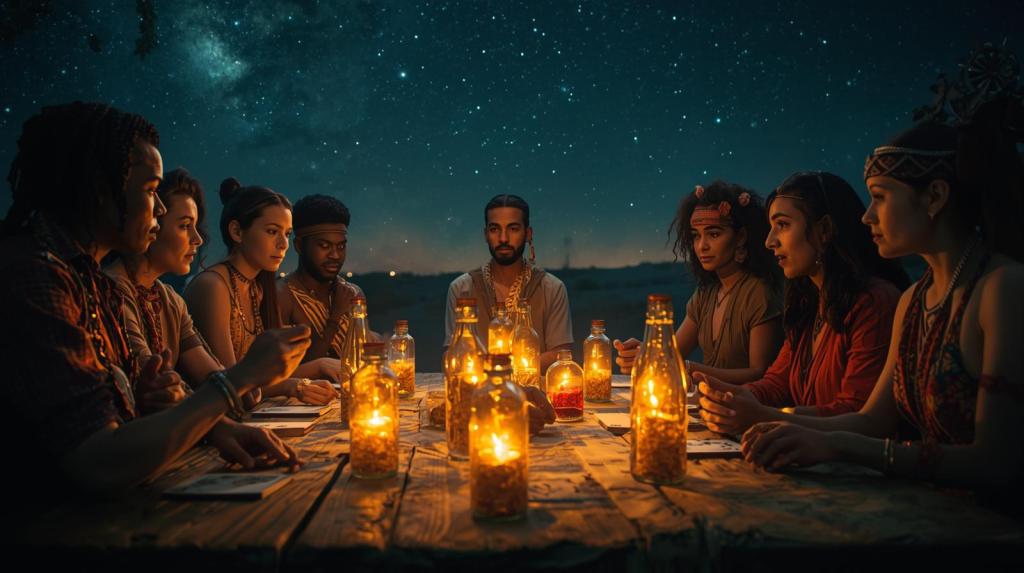
The topic this week was “Origins.” Where we came from, did we live across the world, or even a fictional account based on this one word.
As I sit here this morning, and glance over my pages of journal notes this week, I had to touch on what I’ve been writing about every day.
How I can make sure Neo and Gabi surpass me? How can I make sure they feel good about engineering or dancing, where both are viable opportunities? How can I make sure Neo knows it’s okay to play soccer, but care for women’s rights.
Their views on the planet, peers, the cosmos, cultures, their spiritual heart beat, their desire to climb mountains. I want them to go further than I in the exploration of themselves. And that journey is about living and discerning in a spiritual manner.
Being a couple with family of origins so radically different is tough stuff.
I want to be able to have coffee with my mother once a month. Right now we are thousands of miles apart.
When my wife was in the States, it was tough for her. She missed the things about her culture and families that make life abroad feel like “home.”
I will admit I really like it here. The culture, the ideologies, the politics, the food, the ability to travel Europe cheaply. These are reasons I can see myself leaving my family of origin’s home country even though I’m most comfortable and have a higher chance of success in a country using my language. (Statistically) But we are here dreaming, we are here because it’s probably a better climate to raise kids in, and for the first time in my life all thoughts don’t resolve around my needs.
There is no perfect scenario for us. There are compromises and growing opportunities.
I talked to an Icelandic woman at a birthday party Sunday Gabi went to. She moved her partner to Iceland one year. They tried, and it did not work.
So once she returned she could not look back. Her wife, children, and life are now here.
So as an American, writing this blog, I have to end with a desire to really attempt at root planting, yet be open to ideas on how to get to the states once a year or so, and allow my mother to be close to the grandkids.
Someone always seems to be losing, and I think with time, open minds, and love we can reach a place where both our family of origins only see this as a winning situation.
~Jared
 TheWRITEaddiction.com
Leave a comment